

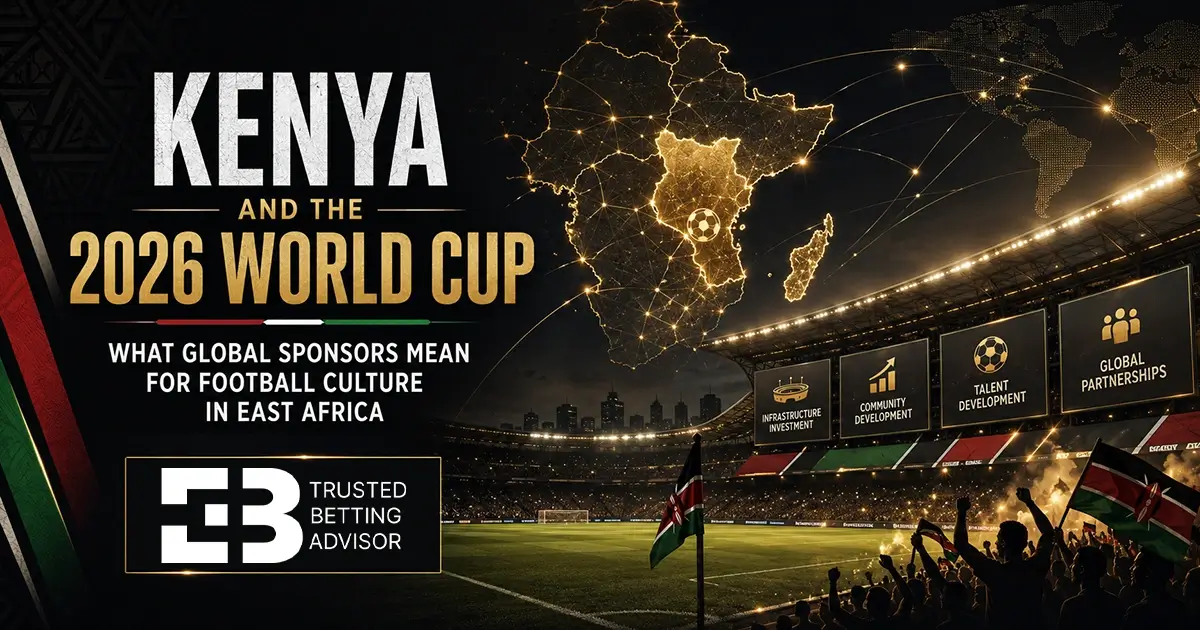
Slowly but steadily, the FIFA World Cup 2026 is approaching and fans are getting ready to see the 48 best football nations in the world. Taking place in the U.S., Canada and Mexico, the competition will bring together millions of people. That’s why it’s not surprising that it has some of the biggest names as sponsors. They will be broadcast worldwide, including in Kenya. Despite not qualifying for the World Cup, Kenya has millions of football fans who will follow every match. This means they will be exposed to major international companies that have invested heavily in the sport. Brands like Adidas, Nike, Coca-Cola, and Visa are just some of the names that we will see.
Historically, most of these sponsors have focused on markets outside Africa, but with 10 representatives from the continent this time, the situation is different. We at Efirbet Kenya think that this is an excellent chance for Africa, so let’s learn more.
Why African Success at the World Cup Matters
Let’s face it, success attracts money when it comes to sport. Football is one of those sports where countries that perform well on the international stage usually get more opportunities. Historically, African teams have been viewed as underdogs in international competitions. Ever since Morocco’s historic results in 2022, however, this is no longer the case. Many African countries are seen as serious competitors capable of challenging all football giants. Senegal and Morocco are clearly the two big leaders, but we also have to address teams like Algeria.
Outside of the 2026 World Cup itself, we can see that Africa has the youngest population out of any other continent. Considering that football is the most popular sport there, sponsors have to pay much more attention, as this market will be incredibly important. When talking about East Africa in particular, this could lead to more sponsorship deals, more football academies and greater international attention.
What Sponsors Could Bring to Kenyan Football
Among the big issues that football fans in Kenya face is infrastructure. There are many talented young players who are clearly doing well, but they do not have the same opportunities to shine as their European counterparts. Kenya lacks enough quality stadiums, proper coaching, sports science and medical support. Some local clubs even struggle financially and stadium conditions are often criticized.
Assuming that sponsors start paying more attention to Africa, this is one of the first departments where we can see improvements. Instead of simply advertising during events, the brands can invest directly in the development of the sport.
Investing in itself can take many forms, such as helping build new facilities or improving existing ones. Kenya already has momentum because the country is slowly preparing to host AFCON 2027 with Uganda. If the big 2026 World Cup sponsors become more interested in this part of the world before that event, they can help the countries a lot.
Outside of that, these brands can also invest in youth academies. The same is true for women’s football, which is growing rapidly in Africa. All in all, they will definitely have a positive effect on everything.
The Economic Side of Football
We can all agree that football is way more than just a sport at this point. It is actually one of the biggest businesses in the world because some of the leading tournaments and competitions generate billions of dollars.
Even though East Africa is not one of the regions that is known for making a lot of money, this could change in the future. Assuming some of the World Cup’s sponsors decide to invest more in this part of the world, the economic impact will extend far beyond the pitch.
For example, this could lead to many new job opportunities. Kenya and other East African nations can see more jobs, media workers, event organizers, stadium employees and tourism jobs.
Speaking of tourism, we can all agree that East Africa has tons of potential. Assuming Kenya has the infrastructure to host major football games, millions of people from around the world will travel to places like Nairobi to watch them.
The Pressure on Sponsors to Invest Beyond Advertising
Among the big questions surrounding the 2026 World Cup is whether sponsors will actually invest in African football or not. Millions will watch the competition next month and are likely to buy the specific products. Considering all that, it’s no surprise that many Kenyans are also expecting these big companies to do more than just place advertisements.
We believe that modern football audiences pay attention to how brands interact with local communities. Because of that, sponsors are under pressure to support football development in the regions where they have a lot of fans.
Assuming the major 2026 World Cup sponsors decide to strengthen their presence in East Africa, they will have to step up their game in countries like Kenya. The country has a large football audience but lacks many of the resources needed to compete with other football nations.
Could the World Cup 2026 Change How Global Brands View East Africa?
We can safely say that the FIFA 2026 World Cup is the second most important football event for Africa after the 2010 World Cup. Many international companies viewed African football mainly as a source of talented players for years rather than a serious business market. However, the sport’s growing popularity and the presence of young people in places like Kenya are changing this perception.
This World Cup will be huge for Africa because the continent will have 10 representatives. Strong performances from some nations would increase international interest in African football as a whole. Given that sponsors always pay attention, Africa has a really good chance of continuing to grow.
More Interesting Articles